Introduction
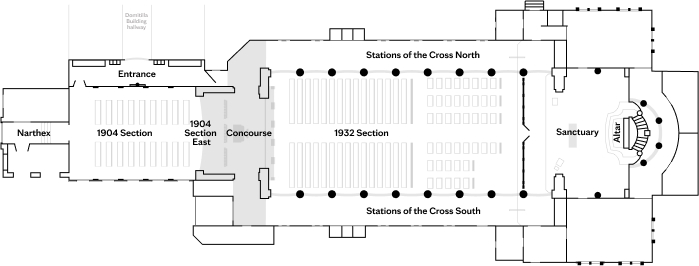
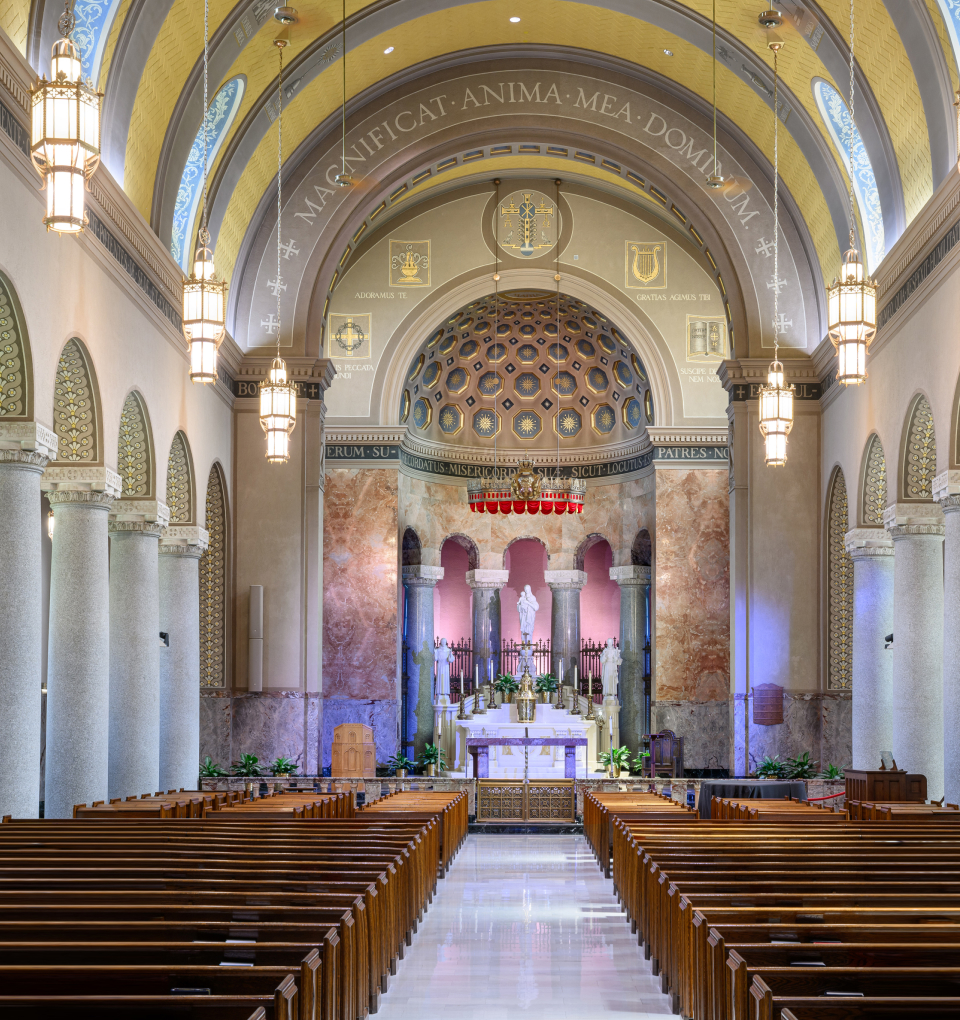
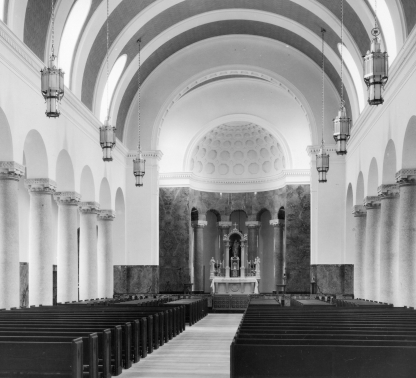
This 1932 section showcases the basilica style of architecture, featuring a central nave, side aisles, vaulted ceiling, and upper windows. The first services in this part of the chapel were held in January 1933, but because of the Great Depression and World War II, the interior stayed plain until decorative elements and artwork were added starting in 1945 and the years that followed.
Learn More Through the Hotspots
Nave
The nave is the central gathering place for worshippers, designed for prayer, worship services, and Catholic Mass. It features a floor made of gray marble from Tennessee and accents of dark green marble quarried in Vermont.
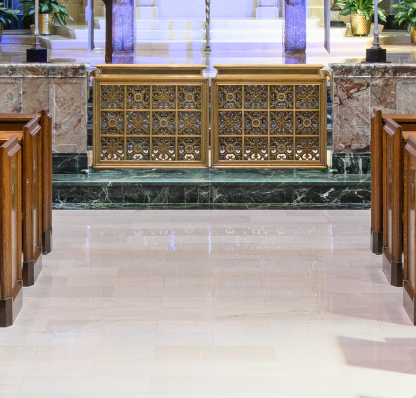
Pews
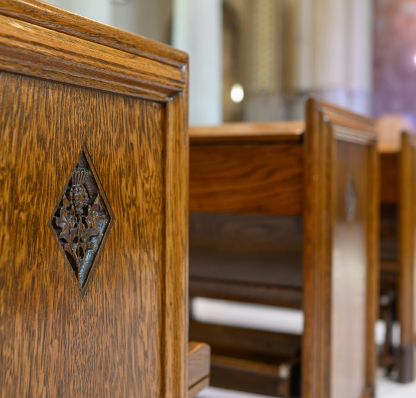
The pews, which feature hand-carved decorative trim, are made of Appalachian oak.
The small pews in the front of the chapel were made for the Franciscan Sisters who worked at the hospital. If a Sister had to leave the chapel to attend a patient, she could do so without disturbing others in the pew.
Pillars
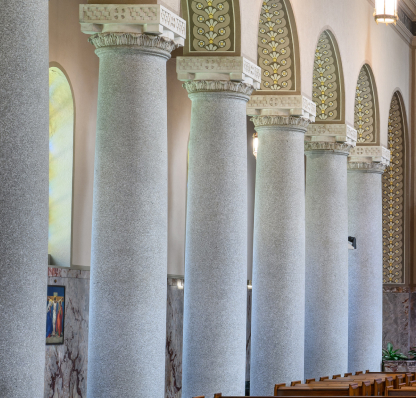
On each side of the nave are eight pillars of unpolished pearl white granite from Minnesota. The pillars separate the nave (central worship area) from the aisles.
Wainscoting Walls
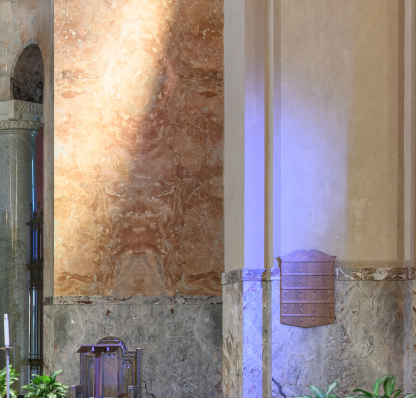
The chapel’s eight-foot wainscoting is made of marble from Germany, while the marble above it comes from an ancient quarry near Rome. The walls feature a book-match design, where marble sections are placed side by side to mirror each other like the pages of an open book. The white marble Stations are from the 1904 chapel.
Clerestory Windows
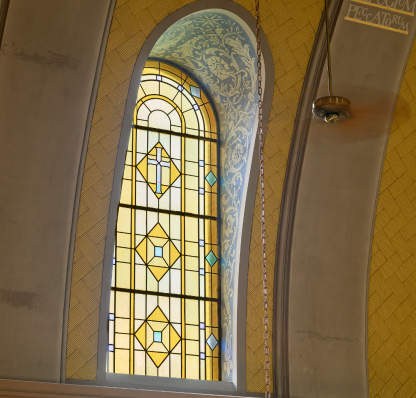
“Clerestory” is a medieval English word. It derives from “clere,” meaning “clear” or “light,” and “story,” which refers to the level of a building. Clerestory windows are a row of windows above the nave, symbolically bringing the light of heaven to the congregation. Light coming through these amber windows produces a sense of peace, worship, and quiet reflection.