Eleven Years Together and Going Strong!
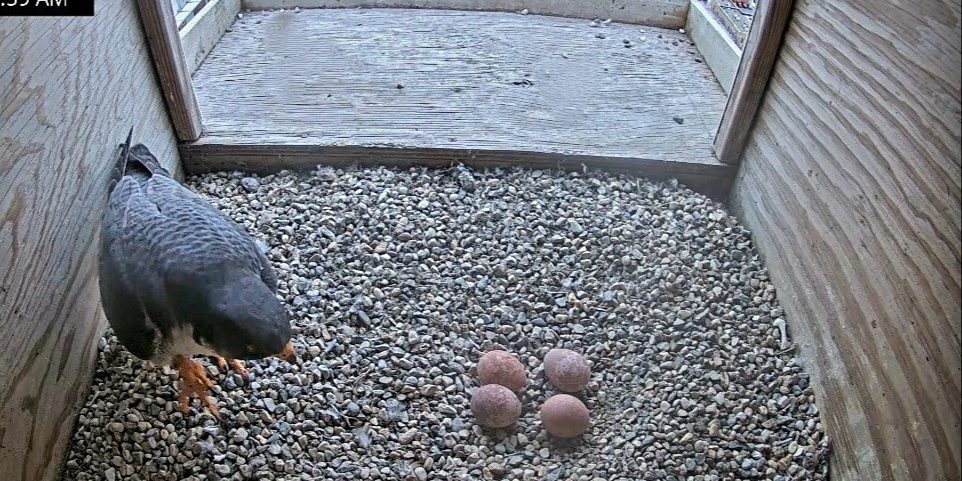
The fourth and last egg arrived on April 1, and since then Hattie has been busy keeping the eggs warm while Orton does the hunting.
For peregrine falcons, four eggs are the most common clutch size, followed by three. True incubation begins once the second-to-last egg is laid, which occurred on March 29, and from that point the countdown begins, with the first chick hopefully hatching 33 to 35 days later.
During incubation, Hattie will spend about 70% to 80% of her time keeping the eggs warm, while Orton stays busy catching enough prey to feed both himself and Hattie. In addition to hunting enough food to eat, Orton also takes his turn on the eggs when Hattie takes a break from her incubation duties to eat, stretch and take a little nap in the sun. Due to his smaller size, it is more challenging for Orton to settle on the eggs, which is one theory about why female peregrines are larger.
Enjoy watching the Falcon Cam to see how the season unfolds and follow the Mayo Clinic Peregrine Falcon Program Facebook page for the latest updates on Hattie, Orton and this year’s nesting season.